
About this resource
This website operates as an independent informational resource focused on tiny homes, ADUs, and small-footprint housing in Ontario and across Canada.
The domain was previously associated with Acorn Tiny Homes, a Toronto-based tiny home design studio that has since closed. The current website is not affiliated with, endorsed by, or connected to that studio, its founders, or any successor entity in any way. Coverage of Acorn’s work on this site is editorial and draws on publicly available press features.
Choosing among tiny home builders in Ontario is harder than it should be. Builder websites all promise the same buzzwords – bespoke Tiny Homes, four-season, CSA-certified – and prices rarely appear next to the marketing photography. This page strips the comparison down to what actually differs between Canadian builders: certification path, model sizes, starting prices in 2026, climate readiness, and the practical question of whether tiny house Ontario buyers consider can legally be a year-round residence. It also includes a dedicated section on the closed-but-still-referenced Acorn Tiny Homes archive, because the studio remains a useful reference for what custom Ontario tiny home design looked like at its most accomplished. Whether the search starts with Ontario tiny homes, tiny houses Ontario, or a specific builder name, the comparison framework here applies equally.
The aim is not to crown one builder. It is to make the comparison clear enough that a buyer can shortlist three or four options before booking a model-home visit.
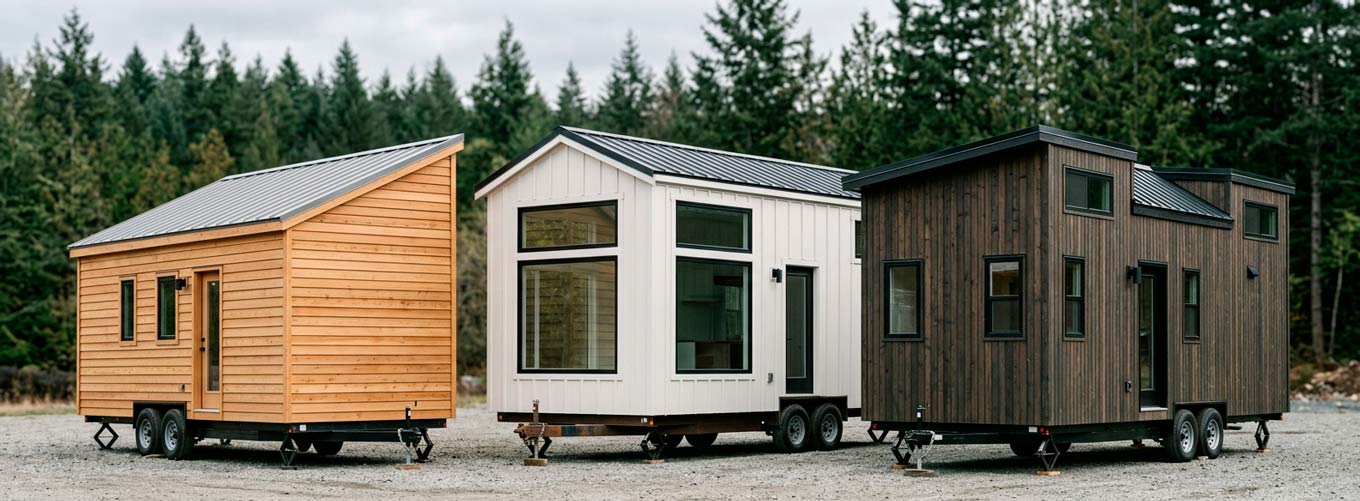
How Tiny Home Builders Ontario Should Be Compared
Tiny homes Ontario Canada coverage often compares builders on price alone, which misses the bigger question of legal placement. Demand for tiny homes in Ontario has grown sharply since Bill 23, and a typical tiny home Ontario buyer now compares several factory producers before committing. A $120,000 build certified only under CSA Z240 RV cannot be a primary residence; an $80,000 build certified to CSA Z240 MH can. Five comparison axes matter more than headline price.
- Certification path (which CSA standard the build qualifies for)
- Model size range (especially whether the builder offers anything under 200 sq. ft. and anything over 400 sq. ft.)
- Climate readiness (R-values, window package, heating system, snow-load roofing)
- Production capacity and lead times (custom-only studios vs. factory production)
- Delivery footprint (some builders only ship within their home province)
Ontario Tiny Home Builders: At-a-Glance Comparison
The table below summarizes the most-referenced Canadian builders for tiny homes Ontario placement, including the closed Acorn Tiny Homes archive for reference. Prices are 2025-2026 indicative figures based on builder communications and industry coverage from sources such as Green Building Canada’s Ontario modular tiny home directory.
Builder | Base Location | Sizes (sq ft) | Starting Price (CAD) | CSA Certification |
|---|---|---|---|---|
Wildscape Co. | Ontario | 170-266 | $74,900 – $179,900 | CSA Z240 MH (year-round, permanent) |
Habitat28 | Ontario / Quebec | 160-600 | Custom quote | CSA-certified, OBC + Quebec compliant |
Atella | Ontario | Two models | From $195,000 | CSA path varies by model |
Crawford Compact Homes | Ontario | Varies | Custom quote | Built to Ontario Building Code |
Petite Homes | Windsor, ON | ADU sizes | Custom quote | Per Ontario Building Code |
Teacup Tiny Homes | Alberta (delivers Canada-wide) | 255-352 | From ~$130,000 | CSA A277 / Z240-RV / Z241 PM |
Acorn Tiny Homes (archive) | Toronto (closed) | Custom 200-546 | ~$180,000+ (Pine Needle) | Custom – case-by-case |
Builder Profiles: Strengths, Limits, Typical Use Cases
Most Ontario tiny homes producers fall into two camps: factory builders running repeating CSA-certified models, and bespoke studios producing one-off commissions. The profiles below cover the major active builders plus the closed Acorn studio, where every acorn tiny home in the archive was a one-off commission rather than a catalogue pick.
Wildscape Co.
Wildscape Co. is regularly described as the only Canadian tiny home manufacturer holding CSA Z240 MH certification – the standard that allows the build to function as a permanent secondary dwelling unit, not a recreational vehicle. The lineup is two models: Cedar at 266 sq. ft. (9.5′ × 28′) and Cypress at 174 sq. ft. (8.5’ × 20′). Both come in two trim levels – Premium and Affordability – with the Cedar Premium starting at $179,900 and the Cypress Affordability line starting at $74,900. The builder offers consulting on permits, septic design and site preparation in addition to the unit itself.
Wildscape’s own positioning is direct: “According to the Ontario building code a ‘Tiny Home’ is anything under 600 sq/ft which means Wildscape dwelling are considered ‘Tiny Homes’ based on the Ontario Building Code. CSA does not have a certification for tiny homes which is why we call them ‘manufactured homes.’” That technical framing is the reason Wildscape units can legally be permanent residences – they sidestep the recreational-vehicle classification entirely.
Habitat28
Habitat28 takes a wider commercial-and-residential approach, with eight series of modular buildings sized from 160 to 600 sq. ft. The builds are CSA-certified and compliant with the National Building Code, the Ontario Building Code and the Quebec Construction Code, which makes Habitat28 unusual in offering cross-provincial coverage from a single design family. The intended applications include residential ADUs, institutional uses (small medical and educational facilities), and commercial backstage units.
Atella
Atella operates a turnkey model: homes are delivered fully fitted out with flooring, bathroom fixtures, kitchen appliances, washer/dryer and lighting. Two models are offered, both starting at $195,000 CAD. The structural system uses high-performance engineered structural insulated panels (SIPs) for both roof and walls, with eco-friendly wood-plastic composite for exterior cladding. The turnkey approach suits buyers who want to avoid coordinating finishes across multiple trades.
Crawford Compact Homes
Crawford Compact Homes is one of the few builders that designs explicitly to meet the Ontario Building Code from the start, rather than retrofitting OBC compliance onto a US-style tiny home design. The product line includes both ADUs and tiny homes on wheels, which gives buyers in cottage-and-city dual situations more flexibility on placement.
Petite Homes
Petite Homes is based in Windsor and focuses heavily on the post-Bill 23 ADU market. The builder publishes practical FAQ guidance: ‘In Ontario, the provincial government has taken big steps to support housing options like ours. Through the More Homes Built Faster Act (Bill 23), you can now build up to three units on a single property in many areas.’ Petite Homes also notes that in Windsor specifically, ‘most of the city falls within a designated exemption zone – meaning no additional parking is needed for your Petite Homes build,’ a useful detail for buyers comparing GTA vs. Southwestern Ontario placement constraints.
Teacup Tiny Homes (Alberta-based, delivers Ontario)
Teacup Tiny Homes is technically an Alberta builder but ships across Canada and serves Ontario buyers regularly. Units are certified to CSA A277, Z240-RV or Z241 PM (the builder publishes the certifying agency – Intertek – on its site). Climate-readiness specs are notable for Canadian conditions: in-floor heat with forced-air propane furnace ‘designed for extreme Canadian winters,’ spray foam insulation at R35 in floors and ceilings and R24 in walls, dual-pane low-E argon-filled windows with screens, and snap-lock steel roofing.
Acorn Tiny Homes (Archive)
Acorn Tiny Homes was a Toronto-based custom studio led by D’Arcy McNaughton. Custom Homes by Acorn Tiny Homes set a design benchmark for the Canadian market for nearly a decade. The company is now closed – the official Facebook statement reads, “Acorn Tiny Homes is now closed. Thank you for your love and support through the years.” – but the model archive remains useful as a design reference, particularly for buyers commissioning custom builds today. The studio’s defining trait was unrelenting customization: every build was a one-off, designed around the client’s lifestyle and the Ontario climate, with no real catalogue. The original Acorn Tiny Homes website documented seven flagship projects, including Pine Needle, Domek, Sakura and Sherloak Home by Acorn Tiny Homes. International press coverage from New Atlas, Yanko Design, Autoevolution and Tiny House Talk regularly cited Acorn as a reference point for what Canadian custom tiny homes could be – many features closed with prompts inviting readers to “head over to their website” for additional photography. The Sakura build in particular travelled across blogs under varied captions — sometimes “tiny house acorn tiny home sakura,” sometimes simpler credit lines.” Forum threads from the studio’s active years routinely told members to “visit acorntinyhomes.ca for latest info” on upcoming builds – that legacy footprint is part of why the archive remains heavily cited today.
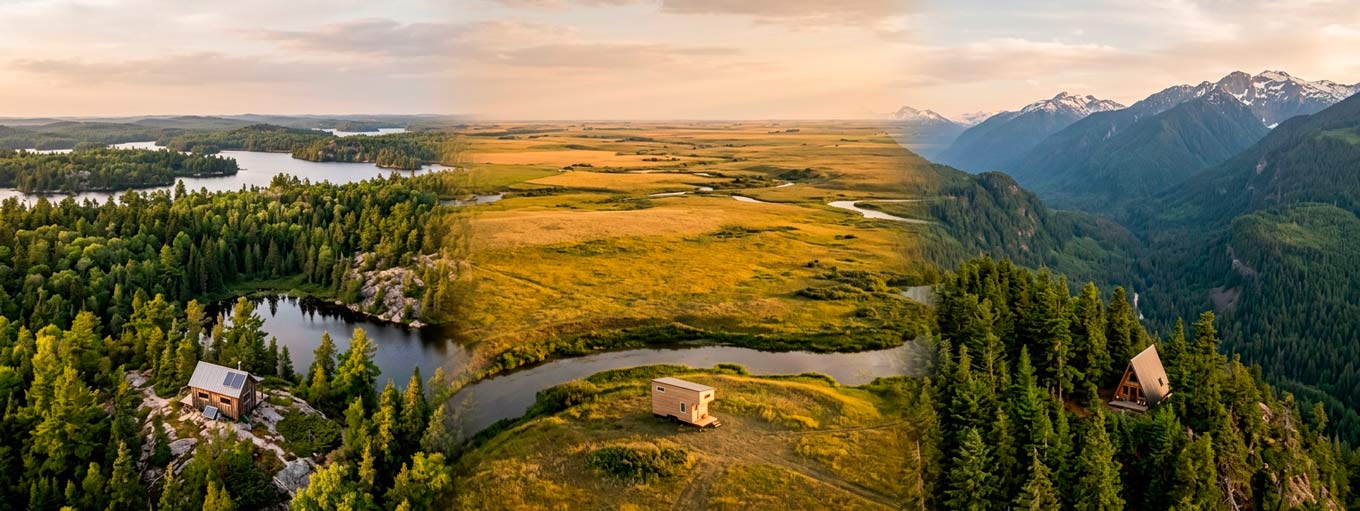
Acorn Tiny Homes Archive: Models in Detail
Even with the company closed, the Acorn project archive remains the most-cited Ontario tiny home portfolio in English-language design media. The breakdown below collects what published coverage documented about each model.
Acorn Model | Concept | Key Specifications | Press Coverage |
|---|---|---|---|
Domek | Off-grid family home (Polish for ‘cottage’) | 3 lofts, atrium shower, full year-round in Ontario | Autoevolution, Tiny House Talk |
Pine Needle | Luxury THOW | ~$180,000 CAD; heated polished concrete, full kitchen | Tiny House Talk |
Purple Heart Manor | Medieval-inspired custom | 43′ × 10.5′ gooseneck trailer, hand-carved interior details | Yanko Design (DR 78) |
Sakura | Japanese-inspired | Light wood palette, transformable furniture | Tiny House Talk |
Sherloak | Detective-themed | Tiny Home Awards 2023 finalist | tinyhouse.com, Mens Gear |
Elevate Tiny House | Compact vertical-design tiny home | Loft-heavy layout, smart vertical use | New Atlas (DR 83), Homecrux |
True North Retreat | Stock-plus model | ~546 sq ft, family-friendly footprint | Multiple outlets |
“D’Arcy runs the Canadian outfit Acorn Tiny Homes, which he founded after word of mouth about his” early builds spread, one feature noted. Another wrote: “cocooned at home watching sitcoms during lockdown, D’Arcy McNaughton of Acorn Tiny Homes was busy building a fully off-grid tiny house for his” family – the Domek project that became the studio’s flagship. The takeaway for buyers: Acorn’s body of work is now reference material, not a current vendor option, but the design vocabulary (loft-heavy interiors, atrium showers, hand-crafted joinery, full off-grid systems) is one that other Ontario builders increasingly try to match.
Beyond Ontario: Tiny Homes for Sale Across Canadian Provinces
Anyone shortlisting tiny homes Ontario or tiny house for sale Ontario options quickly discovers that the closest viable builder is often in another province. The wider tiny house Canada market splits into regional sub-markets with their own certification quirks, and cross-provincial shipping is more common in Canadian tiny home production than in conventional house construction. The regional summary below covers practical placement notes.
Province / Region | Typical Use Case | Common Certification | Local Notes |
|---|---|---|---|
Ontario (GTA, Ottawa) | Garden suite, year-round ADU | CSA Z240 MH, A277 | Bill 23 enables 3 units ‘as of right’ |
Ontario cottage country | Seasonal cottage, park model | CSA Z241 | Muskoka, Kawarthas, Haliburton common |
Alberta | Rural retreats, off-grid | CSA A277 required | Province requires A277 for factory-built |
Saskatchewan | Rural homestead, secondary unit | CSA A277 / Z240 MH | Mixed by municipality |
Manitoba | Cottage and ADU mix | CSA Z240 MH, Z241 | Winter-spec insulation important |
British Columbia | Multiple ADUs, transit-hub density | Mixed – most progressive policy | 3-4 units allowed in many lots |
Alberta and Western Canada Notes
Alberta and Quebec are the two provinces that explicitly require CSA A277 certification for factory-constructed buildings. That makes a tiny home Alberta search materially different from an Ontario one: a buyer in Calgary cannot legally place a CSA Z240 RV unit as a permanent residence, but the same buyer can use CSA A277 modular units placed on a foundation. Builders advertising tiny homes Alberta Canada or tiny homes for sale in Alberta should make their certification path explicit; if they do not, the buyer should walk away.
Searches for tiny home Alberta, tiny homes in Alberta and tiny home for sale Alberta increasingly point to cross-shipped Ontario or BC builds delivered to Alberta sites. This is workable provided the model arrives with CSA A277 certification – not Z240 RV.
Saskatchewan and Manitoba Notes
Tiny house Saskatchewan placements are less constrained than Alberta because the province has not adopted A277 as an exclusive requirement. CSA Z240 MH builds are usable as secondary dwellings in many Saskatchewan municipalities. Manitoba (tiny homes for sale Manitoba) follows a similar pattern, with winter-spec insulation taking on additional importance – the province sees some of the coldest Canadian temperatures, and an R24-wall build that is adequate for Toronto can be marginal for Winnipeg.
Certification Quick Reference
The full CSA breakdown is on the home page, but the short version for buyers comparing tiny home builders is below.
- CSA A277. Factory-built modular buildings. Required in Alberta and Quebec; accepted everywhere. Allows permanent residential use on a foundation.
- CSA Z240 MH. Manufactured homes, with or without chassis. The standard that allows a tiny home to be a legal secondary dwelling unit in Ontario.
- CSA Z240 RV. Recreational vehicles. Seasonal / recreational use only. Cannot be a primary residence.
- CSA Z241. Park model trailers. Seasonal cottage-park placement.
Interesting Facts About Tiny Home Production in Canada
- Certification is expensive. Achieving CSA certification ‘can cost builders tens of thousands of dollars’ according to industry coverage – which is why uncertified tiny homes are cheaper but legally limited.
- Most Canadian tiny homes are not technically DIY. Industry coverage of Acorn observed that ‘they’re not technically DIY-ers’ even though tiny homes are often marketed as a DIY-friendly category. Production builds increasingly rely on factory floors and specialized trades.
- Park models vs. THOWs differ on width. Park models can be up to 14 feet wide – significantly wider than a road-legal THOW at 8.5 feet – which is why park models feel much more like a small house and less like an RV inside.
- Acorn’s projects landed on idealista.com. Spanish and Italian editions of idealista (DR 83 and DR 78 respectively) covered the Paddock Paradise build, making it one of the Acorn projects with the widest international reach.
- Bolota Pequenas Casas. Acorn’s name was localized as ‘Bolota Pequenas Casas’ (Portuguese for ‘Little Acorn Houses’) in some Lusophone press coverage – useful trivia for tracing the studio’s international footprint.
Buyer Checklist Before Committing
Placing a tiny home in Ontario legally is the single most overlooked step in the buying process. Tiny house Ontario buyers should confirm the CSA certification path matches the intended use before signing – not after. The checklist below summarizes the practical questions to settle before a deposit changes hands.
- Confirm the CSA certification path matches the intended use (year-round residence vs. seasonal vs. recreational).
- Verify the municipality permits the chosen model size and configuration as either a primary unit or a garden suite.
- Get a written quote that itemizes site preparation, hydro connection, septic design, transport and final commissioning – not just the build itself. When comparing tiny houses Ontario options on price alone, hidden soft costs distort the picture significantly.
- Check warranty terms: factory-built CSA-certified homes typically carry 1-year structural warranties; some builders offer 5-10 year coverage on key systems.
- Confirm financing and insurance options before signing – RV-classified builds and dwelling-classified builds are treated entirely differently by Canadian lenders.
- Visit a finished model in person where possible. Floor-plan renders do not communicate how 200 sq. ft. actually feels at 6 a.m. in February.
Real Voices on the Ontario Tiny Home Search
Forum posts and builder interviews capture a more candid picture than marketing copy. One commenter on Tiny Homes in Canada wrote: ‘I just can’t seem to get my husband thinking the same way. I love to travel and experience life on the road. He’s a homebody. But when heat and hydro bills alone are pushing $350/mos, taxes are in excess of $2600/yr and the houses are so close you can hear your next door neighbour pass gas from inside his house… something isn’t right.’ Another shared a story of building a tiny home on wheels for $22,000 over six months on a midtown Ottawa driveway after job loss made conventional mortgaging impossible.
These are not advertisements. They are reminders that the practical tiny home buyer in Ontario is often making a financial decision under pressure – and the certification, placement and financing details that this comparison page tracks matter precisely because they determine whether the resulting home is legal, insurable, and sustainable as a long-term residence.
Common Questions From Buyers
The questions below come up repeatedly when buyers shortlist Canadian tiny home producers. Each answer draws on current builder pricing, CSA certification practice, and feedback from Ontario buyers who completed a purchase in the past two years.
Are there any builders left in Ontario doing fully custom work like Acorn did?
Several builders still take custom commissions – Crawford Compact Homes and some smaller Habitat28 configurations are examples – but the Acorn model of one-off, design-led custom builds is increasingly rare in the Canadian market. Most production has moved to standardized models with finish options, because CSA certification is easier to maintain on repeating designs.
Are tiny houses in Ontario classified as primary residences?
Only when the build is CSA Z240 MH or A277 certified and placed on a property that permits residential use. Tiny houses in Ontario built only to CSA Z240 RV are classified as recreational vehicles – legal to park and use seasonally, but not to register as a primary residence.
Can I get a tiny home with a real mortgage in Ontario?
Yes, if the build is CSA Z240 MH or A277 certified and placed on a property with a registered title. Mortgages on RV-classified tiny homes are very difficult to obtain through major Canadian banks; specialty lenders sometimes offer chattel mortgages but at higher rates.
How long is the wait list for an Ontario tiny home builder?
Production builders such as Wildscape Co. and Habitat28 typically quote 4-9 months from contract to delivery. Custom builders quote 9-18 months. Lead times lengthened during 2021-2023 due to supply-chain pressure but have eased in 2025-2026.
What is the most common deal-breaker for first-time tiny home buyers?
Site preparation cost. Buyers fixate on the build price and underestimate hydro connection, septic design and transport. Rural Ontario sites without existing servicing can add $40,000-$100,000 in soft costs before construction begins.
The Acorn Tiny Homes archive remains here as a design reference rather than a sales channel – the company is closed and not accepting new commissions.